
Contactless Vending for Medical Offices: 7 Key Benefits

Table of Contents
Why Contactless Vending Matters in Medical Settings
Vending Machines for Medical Offices: Reducing Wait Times and Improving Patient Experience
Contactless Payment Vending Machines: Speed, Security, and Hygiene
Operational Efficiency: Inventory Management and Uptime
Vending Machines for Outpatient Clinics: Product Selection and Staffing Benefits
What belongs in a clinic vending machine
What does not belong
Using sales data instead of guesswork
Staffing benefits
Infection Prevention and Payment Security in Healthcare Environments
Implementation Considerations and ROI for Medical Offices
Space, power, and placement
Operational requirements
Cost structure
A transparent break-even example
The non-revenue ROI
Frequently Asked Questions
Last Updated: October 17, 2026
Why Contactless Vending Matters in Medical Settings
Contactless vending medical offices transform how patients, visitors, and staff access refreshments, reducing physical contact where infection prevention matters most.
Staff juggle patient care with facility amenities, and waiting patients want quick access to snacks. Traditional machines require handling cash or cards, creating friction and hygiene concerns that don't align with modern healthcare standards.
The global medical vending machines market was valued at USD 1.4 billion in 2023 and is projected to reach USD 2.7 billion by 2030, at a 9.8% compound annual growth rate Strategic Market Research Medical Vending Machines Market Size. This growth reflects healthcare providers' recognition that contactless vending delivers measurable operational and patient experience benefits.
Vending Machines for Medical Offices: Reducing Wait Times and Improving Patient Experience
Patient satisfaction hinges on small details. When someone waits 30 minutes for an appointment, a cold beverage softens the experience, but only if the machine works reliably and processes transactions quickly.
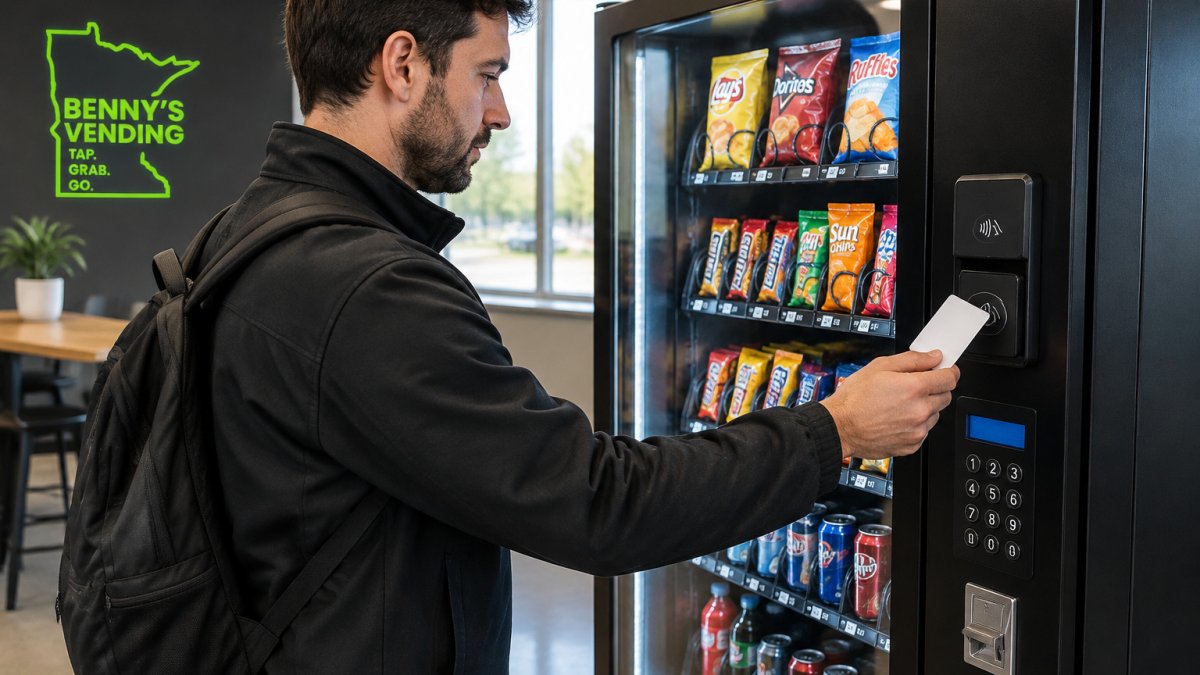
Contactless payment vending eliminates transaction delays: a patient taps their phone or card and gets their item in seconds, no fumbling for cash or jammed card readers. That speed matters when managing patient flow all day.
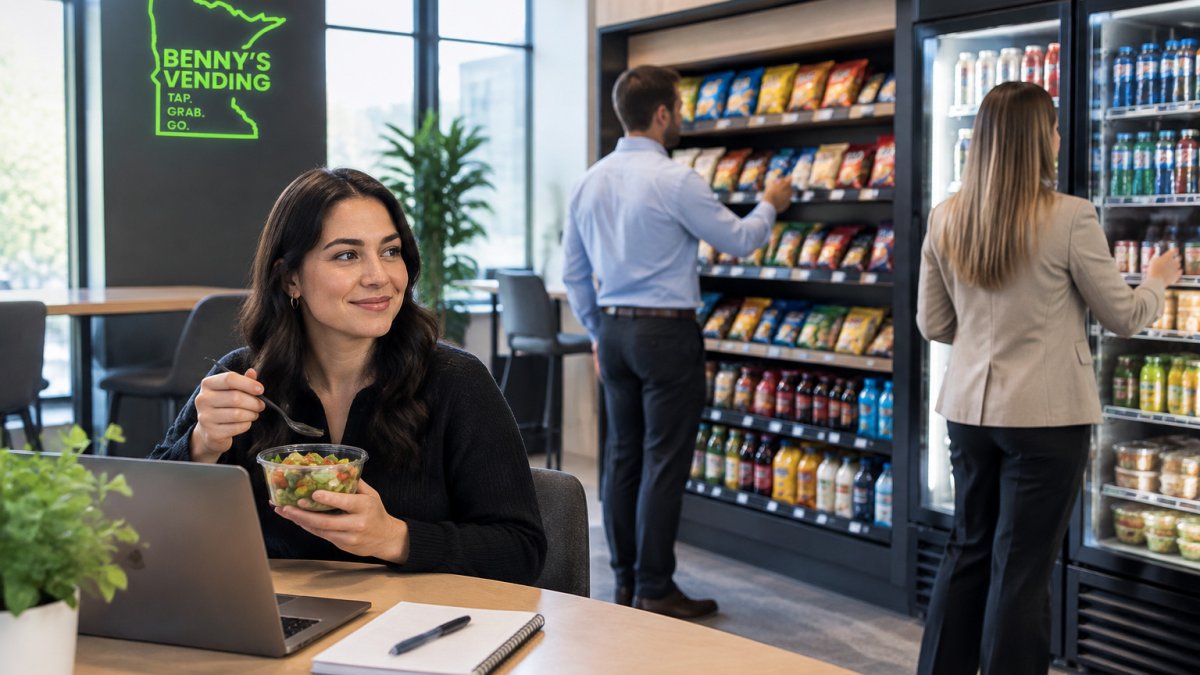
The convenience extends beyond patients: staff grab items during breaks, and visitors get refreshments without leaving the building or asking staff, reducing workflow interruptions.
Offices that implement contactless vending report improved patient feedback on facility amenities, a competitive advantage where patient reviews influence referrals.
Key Takeaway Contactless vending machines reduce transaction time from minutes to seconds while improving how patients perceive your medical office's professionalism and care for their experience.
Contactless Payment Vending Machines: Speed, Security, and Hygiene
Contactless payment addresses three critical healthcare concerns at once: transaction speed, payment security, and hygiene.
A contactless transaction completes in under five seconds, versus cash handling that requires counting, making change, and managing drawer security. The savings compound across dozens of daily transactions.

Contactless systems use encrypted tokenization, so payment information never touches the machine directly, reducing fraud risk and simplifying PCI compliance.
Hygiene represents the most visible benefit. Contactless payment eliminates the need to handle shared payment terminals, keypads, or cash. In medical environments where infection prevention protocols are non-negotiable, this reduction in physical contact aligns with best practices. A 2020 study published in the National Library of Medicine's PubMed Central found that complete healthy vending can be introduced in hospitals without catastrophic loss in sales, suggesting that healthcare environments can successfully implement modern vending without compromising revenue, particularly when paired with contactless transaction methods that reduce cross-contamination vectors.
Watch Out Standard vending machines with physical keypads and cash slots create multiple touch points for disease transmission. Contactless systems eliminate this risk entirely, which is critical in medical offices where immunocompromised patients and vulnerable populations frequent.
Operational Efficiency: Inventory Management and Uptime
Medical offices can't afford stockouts, running out of beverages during a busy clinic day frustrates patients and creates operational friction.
Smart vending machines with real-time inventory tracking solve this: sensors monitor stock continuously and alert your provider automatically when items run low.
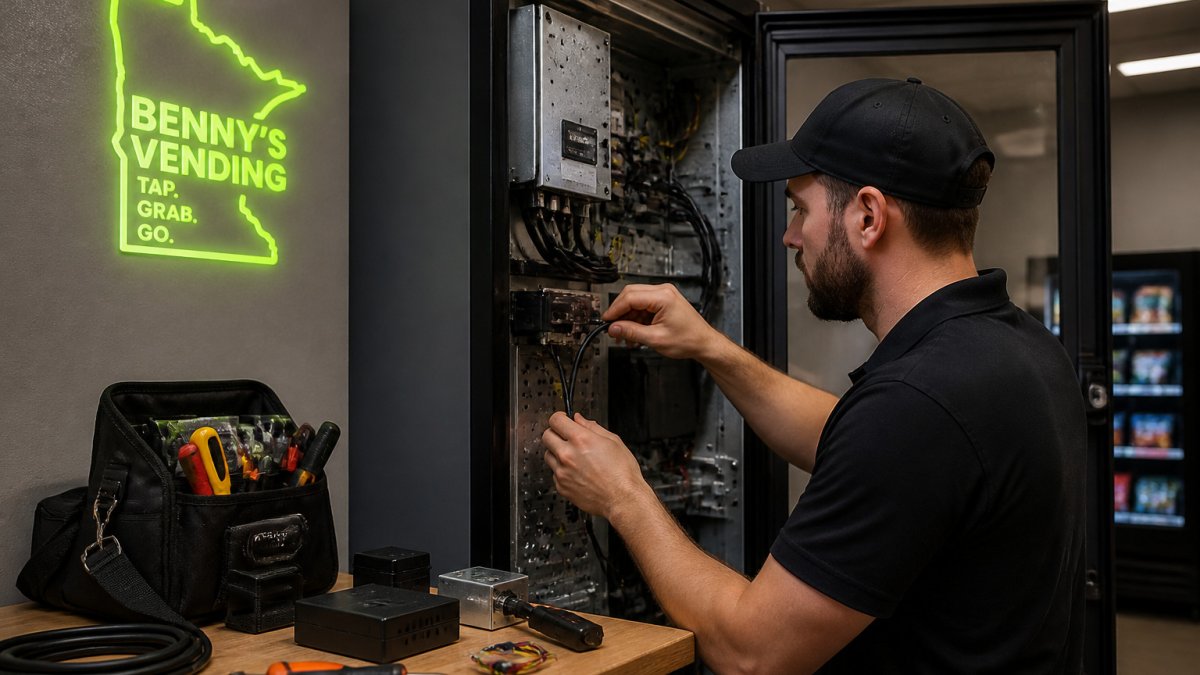
Remote diagnostics enhance uptime. When a machine experiences a technical issue, remote monitoring systems identify the problem before it impacts patient experience. According to Modern Amenities' analysis of smart vending features, remote diagnostics can reduce smart vending downtime by 20-30% in office environments. For medical offices, this reliability translates to consistent availability that patients and staff depend on.
Benny's Vending handles all restocking and maintenance, freeing your staff to focus on patient care rather than facility operations.
Operational Metric | Traditional Vending | Smart Contactless Vending |
Stockout frequency | Weekly or more | Rare (data-driven restocking) |
Downtime resolution | 24-48 hours | Faster (remote diagnostics) |
Staff time managing inventory | 2-3 hours weekly | Minimal (automated monitoring) |
Payment processing errors | Common (cash jams, card failures) | Virtually eliminated |
Vending Machines for Outpatient Clinics: Product Selection and Staffing Benefits
Outpatient clinics serve diverse patient populations, so product selection is a strategic decision. The practical question isn't "should we offer healthy options?" but "which specific items belong in a medical office, and which do not?"
What belongs in a clinic vending machine
A medical office machine works best stocked around three use occasions: the waiting patient, the visitor during a procedure, and the staff member grabbing a quick break. That translates into a predictable core assortment:
Beverages: bottled water, sparkling water, unsweetened iced tea, coffee drinks, and low-sugar sports drinks. Water is consistently the top-selling item in healthcare waiting areas because it serves both hydration and the "something to hold" comfort factor.
Shelf-stable snacks: protein bars, nuts, pretzels, crackers, granola bars, and portion-controlled chips. These hold up to temperature swings and long restock intervals better than perishables.
Personal-care and comfort items: facial tissues, lip balm, hand sanitizer, lotion, and menstrual products. These are high-margin, low-spoilage items that patients and visitors frequently need and rarely plan for.
Basic protective items: disposable face masks and, where local policy allows, small sanitizing wipes. Stock these as a convenience, not as a clinical supply.
What does not belong
A clinic vending machine is not a medical supply cabinet. Do not stock prescription items, OTC medications with dosing instructions, sterile dressings, syringes, or anything implying clinical advice or creating a record-keeping obligation, those belong behind the front desk where a clinician can counsel the patient. Keeping the machine to food, beverages, and general personal-care goods keeps it out of regulatory and liability territory.
If your patient population skews toward a particular need, pediatric, OB/GYN, dialysis, adjust the mix. A pediatric waiting room sells more juice and cracker packs; an oncology office sees higher demand for bland, low-odor snacks and bottled water. Stock to the actual patient base, not a generic "healthy vending" template.
Using sales data instead of guesswork
Smart vending systems track which products move and which sit. Review that data quarterly and cut the bottom performers. A common pattern in clinic installations is that the items that sound healthiest (unsweetened dried fruit, plain rice cakes) underperform while protein bars and water carry the machine. Let the sales data settle the argument rather than staff opinion.
Staffing benefits
Without contactless vending medical offices, staff field snack requests, manage a mini-fridge, handle cash, and track expenses, small tasks that accumulate across a busy week. Contactless vending removes those chores, and cashless payment means no one makes change or reconciles a cash box.
Pro Tip Audit your product mix quarterly against sales data. Keep water, a protein bar, a salty snack, and a personal-care item as your anchor SKUs, then test one or two new items per cycle. This keeps the machine relevant without overcomplicating restocking.
Infection Prevention and Payment Security in Healthcare Environments
Infection prevention in healthcare is foundational: every facility decision must account for disease transmission pathways.
Contactless vending machines reduce transmission vectors significantly: traditional machines require handling cash (which studies show carries microbes) and touching shared keypads, while contactless systems eliminate cash entirely and minimize physical contact at the point of transaction.
Payment security integrates with infection prevention: when systems are secure and reliable, patients and staff use them confidently with no temptation to circumvent the system or share payment methods, supporting hygiene protocols.
Healthcare facilities must also consider compliance requirements. HIPAA and state health department regulations don't directly govern vending machines, but they establish the infection control standards your facility must maintain. Contactless vending aligns with these standards by design.
The CDC's guidance on reducing disease transmission in healthcare settings emphasizes minimizing shared surfaces and high-touch contact points. Contactless vending machines directly support these recommendations.
Implementation Considerations and ROI for Medical Offices
Implementing contactless vending in a medical office requires planning across four areas: physical placement, operational requirements, cost structure, and a realistic ROI model.
Space, power, and placement
A standard combo machine needs roughly 6 to 10 square feet plus clearance for the door swing and restocking. Plan for a dedicated 120-volt circuit, don't share it with clinical equipment. Place it near reception or a waiting alcove for patient-facing units, or in a staff break room for employee-focused machines. Avoid egress corridors and rooms requiring sterile technique.
Operational requirements
Restocking cadence: Most clinic machines need replenishment one to three times per week depending on traffic. Smart machines with real-time inventory alerts let the provider restock on demand rather than on a fixed schedule, which reduces both stockouts and wasted trips.
Food safety and rotation: Stock shelf-stable items first. If you add perishables, set a clear expiration-check routine and pull short-dated product on every restock. Follow FDA food-labeling and storage guidance for any packaged food you sell.
Waste and recycling: Plan for a waste bin and, where available, a recycling bin next to the machine. Clinics generate enough paper and plastic already; adding a vending machine without a waste plan creates a new housekeeping task.
Service response: Ask the provider for a written service-level commitment, how quickly they respond to a jammed machine, a failed card reader, or a temperature fault. A 24- to 48-hour response window is common.
Cleaning: Establish who wipes down the touchpoints (selection buttons, delivery bin, card reader surround) and how often. Contactless payment reduces handling of cash and shared keypads, but it does not eliminate the need to clean the machine's physical surfaces.
Cost structure
Vending costs fall into five buckets, and the split depends on whether you buy, lease, or use a full-service provider:
Equipment: Full-service providers often place the machine at no upfront cost in exchange for a revenue-share or commission arrangement.
Payment processing: Card and mobile-wallet transactions carry a per-transaction fee plus a small percentage. This is the cost most often overlooked when projecting revenue.
Restocking and product cost: Product cost is the largest ongoing expense. Your gross margin depends on the mix and on wholesale pricing.
Maintenance and service: Covered by the provider under a full-service model, or borne by the office if you own the machine.
Revenue share: If you use a provider-placed machine, expect a commission arrangement, often a percentage of gross sales, rather than a flat rental fee.
A transparent break-even example
The numbers are illustrative, model product cost, processing, and revenue share before you sign.
The non-revenue ROI
The revenue case is modest for most clinics, and that's fine. The larger return is operational: staff stop managing an informal snack supply, patients get a reliable amenity, and the office presents a more modern, professional environment, value that shows up in patient-satisfaction feedback and reduced staff interruptions rather than the commission check.
Best For Medical offices with 20+ staff members and consistent patient volume. Smaller practices may find the operational and experience benefits outweigh the revenue potential, while larger facilities gain both experience improvements and a meaningful revenue contribution. Either way, ask for the full cost breakdown, equipment, processing, restocking, maintenance, and revenue share, before committing.
Frequently Asked Questions
What are the main benefits of contactless vending for medical offices?
Contactless vending machines reduce transaction times, eliminate physical contact between patients and equipment, improve hygiene standards, and provide staff with convenient access to refreshments without leaving their workstations. These machines also reduce stockouts through real-time inventory tracking and allow patients and visitors to make purchases even when the front desk is busy, improving overall patient experience and satisfaction.
How do contactless payment vending machines improve hygiene in healthcare settings?
Contactless payment vending machines eliminate the need to touch keypads, cash handling, or coin slots, reducing transmission of germs and bacteria. Mobile wallet payments and contactless cards allow users to complete transactions with a single tap, minimizing hand contact with shared surfaces. This is especially important in medical offices where patients with compromised immune systems or active infections may be present.
Can vending machines for outpatient clinics really reduce staff downtime?
Yes. Self-serve vending machines eliminate the need for staff to leave their stations or wait in line for refreshments, keeping them available for patient care. Remote diagnostics on smart vending machines can reduce downtime in office settings by alerting operators to issues before machines fail completely, ensuring consistent product availability throughout the day.
What products should a medical office stock in a vending machine?
Medical offices can offer a mix of beverages (water, coffee, tea, juice), healthy snacks (granola bars, nuts, fruit), and personal-care items (tissues, hand sanitizer, pain relievers).
Request a Machine
Comments