
7 Tips for Negotiating Vending Machine Service Agreements
Last Updated: October 25, 2026
Quick Summary
To negotiate vending machine service agreements well, start by listing your venue priorities before you talk to any vendor, then pin down placement, money, service, and exit terms in writing. Negotiate commission from real numbers and demand measurable service standards with a trial period and clear exit terms.
Write a one-page list of venue priorities before you call a single vendor.
Percentage commission is usually a share of gross sales paid monthly or quarterly.
Push for a trial period of often three to six months before a full term.
Set restock and repair response times as numbers you can measure.
Build in a review point at six or twelve months with renegotiation triggers.
Table of Contents
Start With Your Venue Priorities Before You Talk Terms
Know the Vending Machine Contract Terms That Matter Most
Placement Rights, Exclusivity, and Machine Access
Service, Restocking, and Maintenance Responsibilities
Negotiate Vending Machine Commission Rates With Real Numbers
Compare the Four Common Payment Structures
Get the Gross Revenue Formula in Writing
Model the Trade-Offs Before You Negotiate
Set the Right Vending Machine Contract Length and Exit Terms
Demand Measurable Service Standards and Response Times
Use a Vending Machine Service Agreement Template as Your Checklist
Build In Performance Reviews and Renegotiation Triggers
Request a Machine and Negotiate From a Position of Clarity
Frequently Asked Questions
Start With Your Venue Priorities Before You Talk Terms
Before you call a single vendor, write down what your location needs. The businesses that get the best tips for negotiating vending machine service agreements start here, not at the bargaining table. At Benny's Vending, we see this play out across Minnesota offices and facilities every week: the site that knows its priorities gets a better deal.
A vending machine service agreement is a written contract between a location owner and a vending operator that sets placement, commission, service, and term terms. It protects both sides.
Start with a one-page list of what matters most to your venue:
Foot traffic and break room space
What products your people actually buy
How often machines must be restocked
Who handles repairs and how fast
Whether you want commission or a free amenity
That list becomes your value proposition. You bring the location, the foot traffic, and the customer convenience. The operator brings machines, product, and service. A win-win scenario starts when you name your priorities first.
Know the Vending Machine Contract Terms That Matter Most
The clauses that cost venues the most are the ones nobody reads. Vending machine contract terms fall into four groups: placement, money, service, and exit. We will walk through each.

Placement Rights, Exclusivity, and Machine Access
Placement rights decide where machines go and who else can move in. Exclusive placement means no competing machines on site. That is fine if you get something for it.
Ask three questions before you sign:
What exact space is assigned to the machine?
Does exclusivity block nearby competitors or only on-site ones?
What access does the operator get, and when?
Prime placement near a break room or entrance drives sales. If the operator wants exclusivity, trade it for better terms. Never give it away for free.
Service, Restocking, and Maintenance Responsibilities
Spell out who does what. A vague service clause is where disputes start. Pin down restocking frequency, repair turnaround, and damage liability.
Your agreement should state:
Restocking schedule and who pays for product
Who handles repairs and who pays for parts
How damage and liability are split
What happens if the machine sits empty
Many operators handle all of it, which keeps your team out of the logistics. Others let you self-restock to cut costs. Decide which model fits before you negotiate. For a deeper look at ongoing upkeep, see our guide to vending machine maintenance for small businesses.
Watch out: a contract that says "regular servicing" without a number is unenforceable. You cannot hold anyone to a schedule that does not exist.
Negotiate Vending Machine Commission Rates With Real Numbers
Commission is where most venues leave money on the table. Vending machine commission rates are usually a percentage of gross sales, paid monthly or quarterly. The exact rate depends on traffic, product mix, and who owns the machine. But percentage commission is only one structure. Flat rent, minimum guarantees, and sales thresholds change the math in ways that matter.
Run the math before you talk. Ask the operator for a sample monthly sales figure, then test the scenarios:
Scenario | Monthly Sales | Commission Rate | Your Monthly Payout |
Low traffic | $1,000 | 10% | $100 |
Steady traffic | $2,500 | 15% | $375 |
High traffic | $4,000 | 20% | $800 |
These are illustrative numbers, not quotes. The point is to see how rate changes move your payout. A small rate bump on high sales beats a big rate on low sales.
Compare the Four Common Payment Structures
Percentage commission is not the only way to get paid. Each structure shifts risk between the venue and the operator.
Flat rent: The operator pays a fixed monthly amount regardless of sales. Predictable for the venue, but you give up upside if sales are strong.
Percentage commission: The operator pays a share of gross sales. You share in the upside, but your payout moves with traffic and product mix.
Minimum guarantee: The operator pays the greater of a percentage commission or a fixed floor. This protects the venue during slow months while keeping upside when sales recover.
Sales thresholds: The commission rate steps up once sales pass an agreed level. This rewards the venue for delivering traffic and aligns both sides on growing sales.
A common pattern is to combine a minimum guarantee with a percentage commission above a threshold. That gives the venue a predictable floor and a share of strong performance.
Get the Gross Revenue Formula in Writing
A percentage of what? Some operators deduct fees before applying the percentage, which shrinks your payout. Clarify the formula in the contract.
Ask these questions:
Is commission calculated on gross sales before or after payment processing fees?
Are refunds, chargebacks, or spoilage deducted before commission?
Is sales tax included in the base or excluded?
How often are reports provided, and in what format?
Get the formula in writing and ask for a sample report so you can verify the math. If you are weighing commission against a zero-cost model, our breakdown of zero cost vending machine service options explains how each structure works.
Key Takeaway A 15% commission on gross sales and a 15% commission on net-after-fees are not the same deal. The formula matters as much as the rate.
Model the Trade-Offs Before You Negotiate
Use the operator's sample sales figure to compare structures side by side. If the sample shows $2,500 in monthly sales, a 15% commission pays $375. A $300 minimum guarantee with a 10% commission above $2,500 pays $300 in a slow month and more when sales grow. A flat $250 rent pays the same every month but caps your upside.
There is no universal best structure. The right choice depends on your traffic, your tolerance for variability, and how confident you are in the operator's sales projections. Bring the comparison to the table and negotiate from numbers, not impressions.
Set the Right Vending Machine Contract Length and Exit Terms
A long contract protects the operator, not you. Vending machine contract length should match your risk. Short terms with clear renewal and notice periods keep you flexible.
Push for these terms:
A trial period, often three to six months, before a full term
A renewal clause you can decline
A notice period that fits your lease
Clear termination and equipment removal terms
Exit planning matters. If your lease ends or your needs change, you need a clean way out. Ask who pays to remove the machine and how fast it happens. A vendor confident in its service will not fear a short trial. That confidence is worth more than a long lock-in.
Demand Measurable Service Standards and Response Times
"Fast service" is not a standard. A response time is. Put numbers in the agreement so you can measure performance.
Set service-level standards like these:
Restock within a set number of business days of a low-stock alert
Repair response within a defined window
A named contact for service requests
A monthly uptime or availability target
Modern systems make this easy to track. Real-time inventory tracking and low-stock alerts mean the operator knows a machine is running low before your people do. Hold them to it. For a practical checklist you can hand a vendor, see our vending machine maintenance tips for managers.
Use a Vending Machine Service Agreement Template as Your Checklist
A vending machine service agreement template keeps you from missing clauses. You do not need a lawyer to build a checklist. You need a list of every term that affects money, service, and exit.
Run through this before signing:
Placement: exact space, access hours, exclusivity scope
Money: commission rate, gross revenue formula, payment timing
Service: restock schedule, repair window, named contact
Liability: damage, insurance, who pays for what
Term: length, trial period, renewal, notice period
Exit: termination terms and equipment removal
Fees: any processing, software, or connectivity charges
That last item matters. Some agreements bury charges in the fine print. Our guide to smart vending machine hidden fees covers the charges to watch for before you agree to anything.
Build In Performance Reviews and Renegotiation Triggers
A contract you cannot revisit is a contract that ages badly. Build in a review point. Many venues set a check-in at six or twelve months to look at sales, service, and product mix.
Set renegotiation triggers in advance:
Sales fall below an agreed level
Service response misses the standard twice in a row
Product mix stops matching what people buy
Your lease or headcount changes
Data-driven restocking helps here. When the operator tracks what sells, you can adjust the mix and the commission together. A review clause turns a static deal into one that keeps working for both sides.
Request a Machine and Negotiate From a Position of Clarity
You now have the tools: priorities, clause checks, commission math, service standards, and review triggers. The last step is to start the conversation with clear terms in hand.
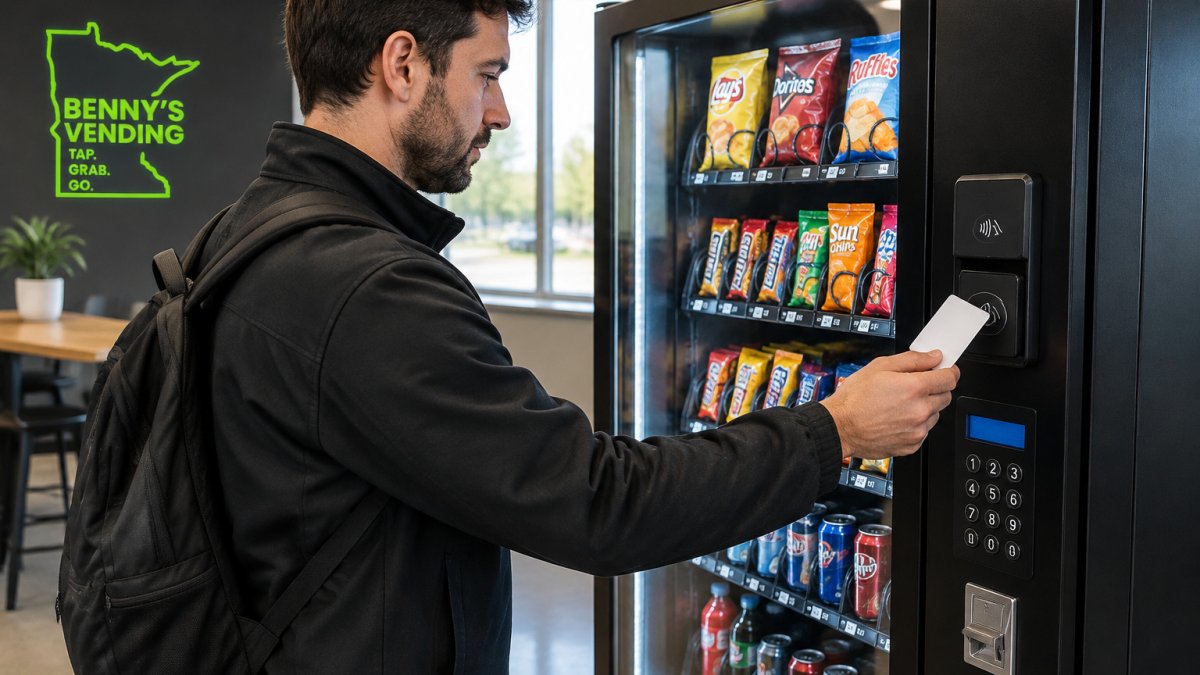
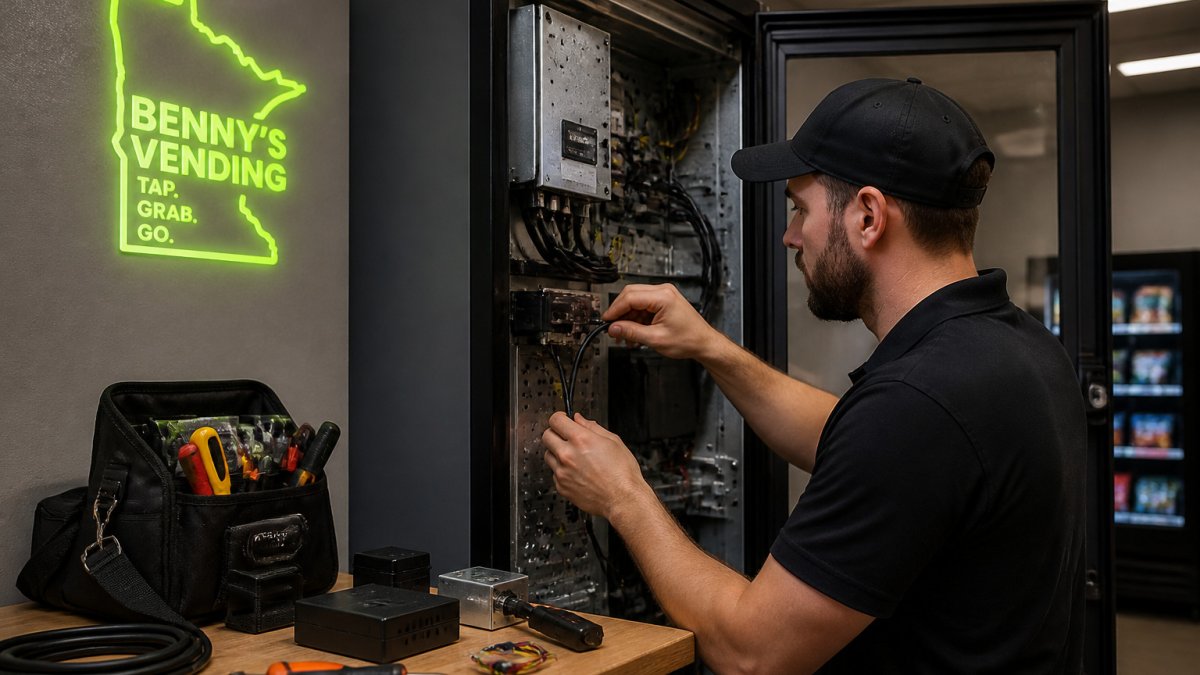
Benny's Vending serves offices, facilities, and properties across Minnesota with AI-powered smart stores and vending. We handle installation, maintenance, and restocking, so your team stays out of the logistics. Our real-time inventory tracking keeps machines stocked, contactless payment keeps checkout fast, and our zero cost and no contract options remove the long-term risk that makes negotiation stressful. You negotiate from clarity, not pressure. Refining your approach to these agreements requires an understanding of effective contract negotiation strategies that align long-term operational goals with sustainable service outcomes.
Get started with Benny's Vending and request a machine that fits your space and your people.
Frequently Asked Questions
What should a vending machine service agreement include?
At minimum, it should spell out placement rights and exclusivity, commission or rent terms with the exact calculation method, restocking frequency, maintenance and repair responsibilities, insurance and liability, contract length, renewal and termination notice, and equipment removal at exit. Put each item in writing and confirm who is responsible for damage, power access, and machine removal.
How long should a vending machine contract length be?
Shorter is safer while you test a provider. Proposing a 3 to 6 month trial and putting the agreement in writing before committing long term is often recommended. After the trial, a one to three year term with a 30 to 60 day termination notice is easier to manage than a five year lock-in. Avoid auto-renewal clauses that extend the term silently, and confirm in writing what happens to the equipment if you exit early.
What commission is typical in a vending machine contract?
Commission is usually a percentage of gross sales paid to the venue, but the rate depends on traffic, machine type, and who covers installation and service. Do not accept a rate without asking how gross revenue is calculated and when payment arrives. Ask for sales reporting so you can verify the numbers, and compare the commission against what the machine actually earns per month. A higher percentage on a low-volume machine can be worth less than a lower rate with better placement and service.
Can you cancel a vending machine service agreement early?
Only if the agreement gives you a way out. Negotiate a termination clause before signing: a notice period, a defined cure window for service failures, and clear language on equipment removal and any remaining obligations. Starting with a short term is often recommended so you are not locked in if performance disappoints. If a provider will not include any exit terms, treat that as a warning sign and ask what happens when the machine underperforms.
Request a Machine
Add bennys-vending.com as a preferred source on Google →

Comments